


Hey there! As a supplier of long extension pole saws, I've seen firsthand how important it is to pick the right one for your specific needs. Whether you're a professional arborist or a homeowner looking to do some light tree trimming, choosing the appropriate pole saw can make all the difference in your efficiency and safety. So, let's dive into how you can choose the right long extension pole saw for you.
Consider the Reach You Need
The first thing you gotta think about is how far you need to reach. Pole saws come in different lengths, and you want to make sure you get one that can reach the branches you need to cut. If you're dealing with tall trees, you'll obviously need a longer pole saw.
For example, if you have some large oak trees in your yard and you need to trim the upper branches, a shorter pole saw just won't cut it. You'll want to look for a pole saw with an extended reach. Our Adjustable Telescopic High Pole Saw is a great option here. It's adjustable, so you can extend it to the length you need, whether it's for a small job or a more extensive tree trimming project.
Power Source Matters
Another crucial factor is the power source. There are basically three main types: electric, gas, and battery-powered.
Electric pole saws are usually lightweight and easy to handle. They're also relatively quiet and don't produce emissions. However, they're limited by the length of the power cord, so you need to be near an electrical outlet. If you have a small yard and don't need to move around too much, an electric pole saw might be a good fit.
Gas-powered pole saws, on the other hand, offer more power and mobility. They're great for larger jobs and can handle thicker branches. But they're heavier, noisier, and require more maintenance. You also have to deal with fuel and oil.
Battery-powered pole saws are a popular choice these days. They offer a good balance between power and convenience. You don't have to worry about cords or fuel, and they're usually lighter than gas-powered ones. Just make sure you have spare batteries if you're going to be doing a lot of trimming. Our Carbon Telescopic Pole Saw comes in a battery-powered option that's both powerful and lightweight.
Blade Type and Size
The blade is what does the actual cutting, so it's important to choose the right one. There are different blade types, such as curved and straight blades.
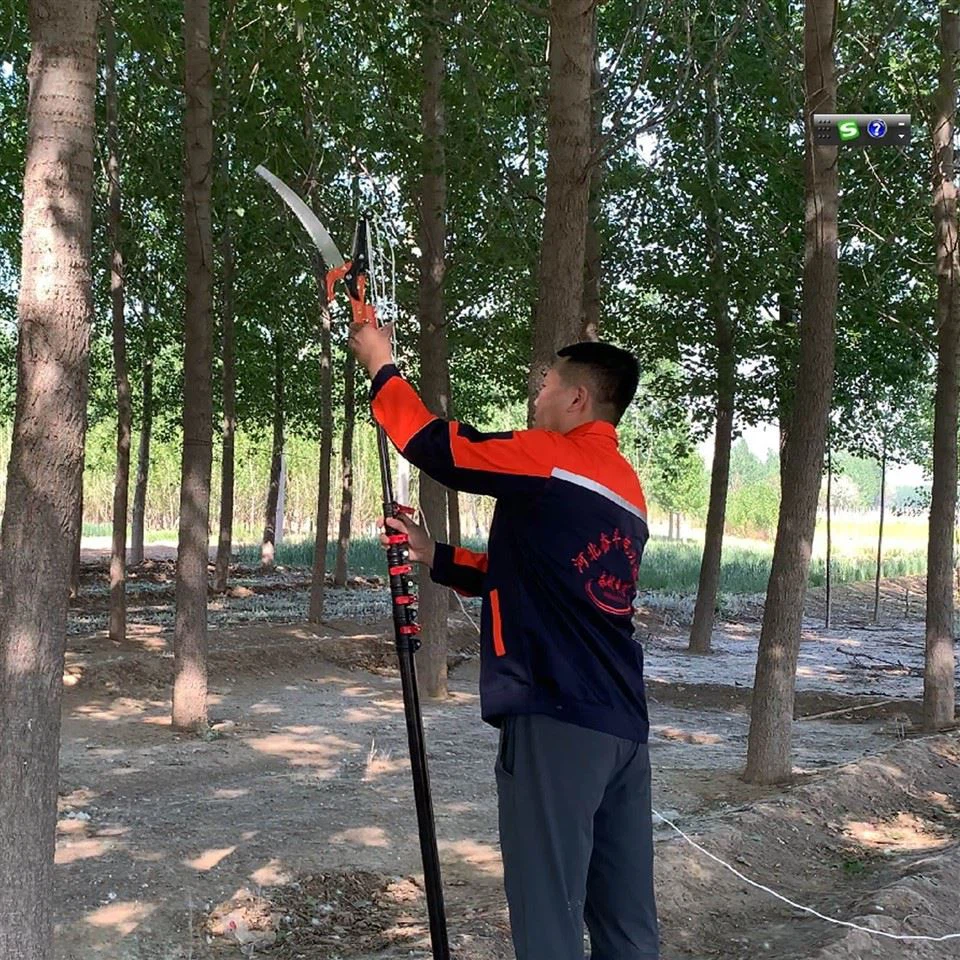

Curved blades are great for cutting through branches at an angle. They're more efficient for pruning and shaping trees. Straight blades, on the other hand, are better for making straight cuts and are often used for larger branches.
The size of the blade also matters. A larger blade can cut through thicker branches, but it might be heavier and harder to control. If you're mostly dealing with small to medium-sized branches, a smaller blade might be more suitable. Our Adjustable Pole Saw has a variety of blade options to choose from, so you can pick the one that best suits your needs.
Comfort and Ergonomics
Let's face it, using a pole saw can be tiring, especially if you're doing it for a long time. That's why comfort and ergonomics are important. Look for a pole saw with a comfortable grip and a well-balanced design.
Some pole saws have adjustable handles, which can be really helpful if you have different hand sizes or if you want to change your grip during use. Others have padded handles to reduce fatigue. Make sure you can hold the pole saw easily and that it doesn't feel too heavy or awkward in your hands.
Safety Features
Safety should always be your top priority when using a pole saw. Look for features like a chain brake, which can stop the chain quickly in case of a kickback. A chain guard is also important to protect you from flying debris.
Some pole saws have anti-vibration technology, which can reduce the stress on your hands and arms. This is especially important if you're going to be using the pole saw for an extended period.
Cost and Budget
Of course, cost is a factor for most people. Pole saws can range in price from relatively inexpensive models to more high-end, professional-grade ones.
It's important to set a budget and look for a pole saw that offers the features you need within that budget. Keep in mind that a more expensive pole saw might have better quality and more features, but it might not always be necessary for your specific needs.
Conclusion
Choosing the right long extension pole saw for your needs doesn't have to be complicated. By considering factors like reach, power source, blade type and size, comfort, safety, and cost, you can find a pole saw that's perfect for you.
If you're still not sure which pole saw is right for you, or if you have any questions, don't hesitate to reach out. We're here to help you make the best decision for your tree trimming needs. Whether you're a professional or a DIY enthusiast, we have a wide range of long extension pole saws to choose from. Contact us today to start the procurement discussion and find the perfect pole saw for your project.
References
- "Tree Trimming and Pruning Guide" - Home Improvement Magazine
- "Pole Saw Buying Guide" - Outdoor Equipment Review Website


