


Can a Carbon Fiber Telescopic Pole be Used for Model Airplane Flying?
Model airplane flying is a thrilling hobby that combines elements of engineering, aerodynamics, and pure fun. One of the ongoing discussions within the model aviation community is whether a carbon fiber telescopic pole can be a practical tool for this activity. As a supplier of carbon fiber telescopic poles, I'm here to delve into this topic and explore the potential of our products in the world of model airplane flying.
Properties of Carbon Fiber Telescopic Poles
Before we assess their suitability for model airplane flying, let's understand the key properties of carbon fiber telescopic poles. Carbon fiber is a material known for its exceptional strength - to - weight ratio. It is significantly lighter than metals like aluminum or steel while still offering high tensile strength. This means that a carbon fiber telescopic pole can be extended to a considerable length without adding excessive weight.
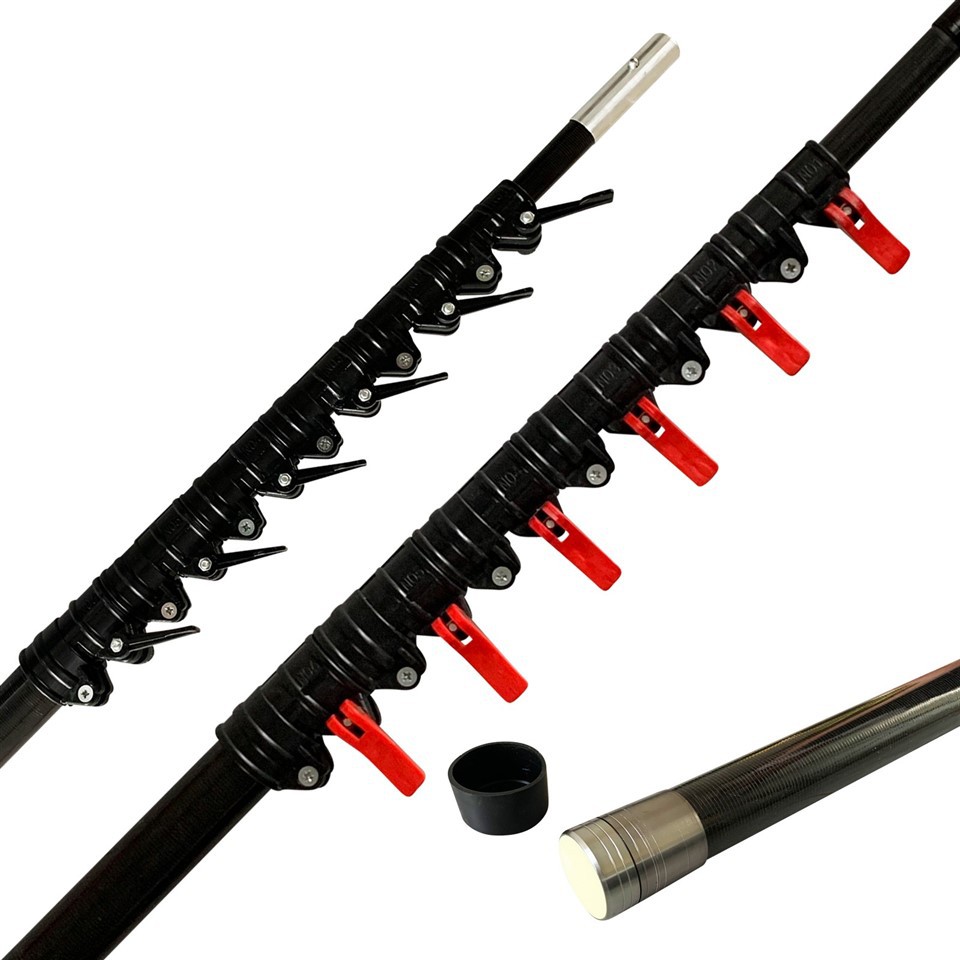

The telescopic design allows the poles to be adjusted to different lengths. Whether you need a short, compact pole for confined spaces or a long one for reaching greater distances, these poles can be easily extended and retracted. Our poles, such as the Carbon Fiber Telescopic Pole for Window Cleaning, are designed with precision to ensure smooth extension and retraction, and they maintain their structural integrity throughout the process.
In terms of durability, carbon fiber is resistant to corrosion, which is a major advantage compared to metal poles. It can withstand various environmental conditions, including exposure to moisture, without rusting or deteriorating. This makes carbon fiber telescopic poles a long - lasting investment.
Potential Uses in Model Airplane Flying
Launching and Retrieving Model Airplanes
One of the primary potential uses of a carbon fiber telescopic pole in model airplane flying is for launching and retrieving the aircraft. A long, lightweight pole can be used to hold the model airplane at a safe distance during the launch process. This is particularly useful for larger model airplanes or those with complex launching mechanisms. By using a telescopic pole, the operator can stand at a more secure position, reducing the risk of injury from the spinning propellers or sudden movements of the plane during take - off.
When it comes to retrieving a model airplane that has landed in a hard - to - reach area, such as a tree or a body of water, the adjustable length of the telescopic pole becomes invaluable. You can extend the pole to reach the plane and bring it back safely. Our Carbon Fiber Extendable Pole can be adjusted to the perfect length for such retrieval tasks.
Aerodynamics Testing
Carbon fiber telescopic poles can also play a role in aerodynamics testing of model airplanes. By attaching sensors or small instruments to the end of the pole, you can position them near the model airplane in flight. This allows for accurate measurement of airspeed, pressure, and other aerodynamic parameters. Since carbon fiber has a low drag coefficient, it won't significantly affect the flow of air around the testing area, ensuring more accurate results.
Remote - controlled Installation and Adjustment
For model airplanes that require remote - controlled adjustments in mid - flight, a carbon fiber telescopic pole can be used to install or adjust the control mechanisms. The long reach of the pole allows you to access components on the plane without having to get too close. You can make adjustments to flaps, rudders, or other control surfaces with precision, enhancing the performance of the model airplane.
Limitations and Considerations
Rigidity and Stability
While carbon fiber is strong, its flexibility can be a double - edged sword. In some cases, excessive flexibility in a telescopic pole may cause instability, especially when the pole is extended to its maximum length. This can be a problem when using the pole for tasks that require high precision, such as launching a model airplane with a specific angle and force. To mitigate this issue, our Carbon Fiber Telescopic poles are engineered to provide a good balance between flexibility and rigidity, ensuring stable operation even at extended lengths.
Cost
Carbon fiber telescopic poles generally come at a higher cost compared to poles made from other materials. This can be a deterrent for some model airplane enthusiasts, especially those on a tight budget. However, it's important to consider the long - term benefits of using a carbon fiber pole, such as its durability and performance advantages. Over time, the investment in a high - quality carbon fiber telescopic pole can pay off in terms of reduced maintenance and replacement costs.
Comparison with Other Materials
Aluminum Poles
Aluminum poles are a common alternative to carbon fiber telescopic poles. They are relatively inexpensive and offer good strength. However, they are heavier than carbon fiber poles, which can be a drawback when using the pole for long periods or for tasks that require quick and easy maneuverability. Aluminum poles are also more prone to corrosion, especially in humid or salty environments.
Fiberglass Poles
Fiberglass poles are another option. They are lighter than aluminum but not as strong as carbon fiber. They can be more brittle and may break under high stress. Carbon fiber poles, on the other hand, offer a better combination of strength, lightness, and flexibility, making them a superior choice for many model airplane flying applications.
Real - World Applications and User Experiences
Many model airplane enthusiasts have already started using carbon fiber telescopic poles in their flying activities. For example, some users have reported great success in using our Betel Nut Special Pole for retrieving their model airplanes from tall trees. The long reach and lightweight design of the pole make it easy to maneuver and access the plane without causing any damage.
In aerodynamics testing, users have found that attaching sensors to the carbon fiber telescopic pole provides more accurate data compared to other methods. The low drag of the carbon fiber allows the sensors to measure the air flow around the model airplane without interference, leading to better - informed design and performance improvements.
Conclusion
In conclusion, a carbon fiber telescopic pole can indeed be used for model airplane flying. Its unique properties, such as high strength - to - weight ratio, adjustable length, and durability, make it a valuable tool for various tasks in the model aviation field, including launching, retrieving, testing, and adjustment. While there are some limitations, such as cost and potential flexibility issues, the benefits often outweigh these drawbacks.
If you're a model airplane enthusiast looking for a reliable and high - performance tool, our carbon fiber telescopic poles could be the solution you need. We offer a wide range of products, including the Carbon Fiber Areca Nut Harvesting Telescopic Pole, designed to meet different needs and requirements. Contact us if you're interested in purchasing carbon fiber telescopic poles for your model airplane flying activities. We're always happy to discuss your specific needs and help you find the perfect product.
References
- [1] "Materials Science and Engineering: An Introduction" by William D. Callister Jr. and David G. Rethwisch. This textbook provides in - depth information on the properties of carbon fiber and other materials.
- [2] "Model Aircraft Aerodynamics" by John S. Denker. This book offers insights into the principles of aerodynamics in model airplanes and how different tools can be used for testing and improvement.
- [3] User testimonials and feedback from the model airplane flying community on online forums and hobbyist websites.


